
Material Selection Software
OBJECTIVE
Enable product designers to select appropriate materials
Help product designers to choose materials that meet all the requirements
including inconspicuous ones like sensorial and intangible properties. In addition to this
primary goal, another goal was to explore the possibility of improving the users' creativity
through the software.
PROCESS
Overview of the project
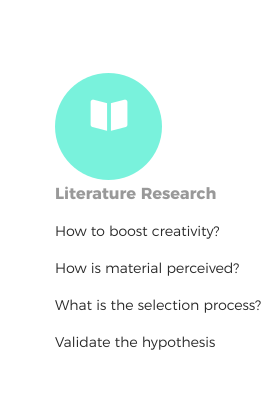
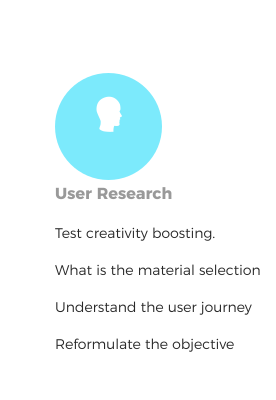
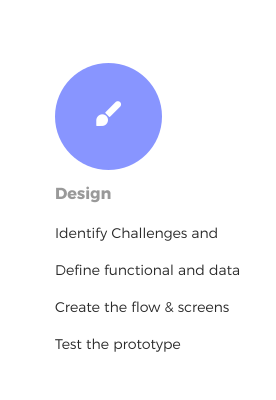
Part of this project has been carried out by Me, Final Year, Undergraduate,
IIT Guwahati and Pallavi Yellamelli, Final Year, Undergraduate at IIT Guwahati, under the
mentorship of Asst.Prof.Sharmistha Banerjee, IIT Guwahati.
PROBLEM IDENTIFICATION
Insufficient Data in Material Selection tools
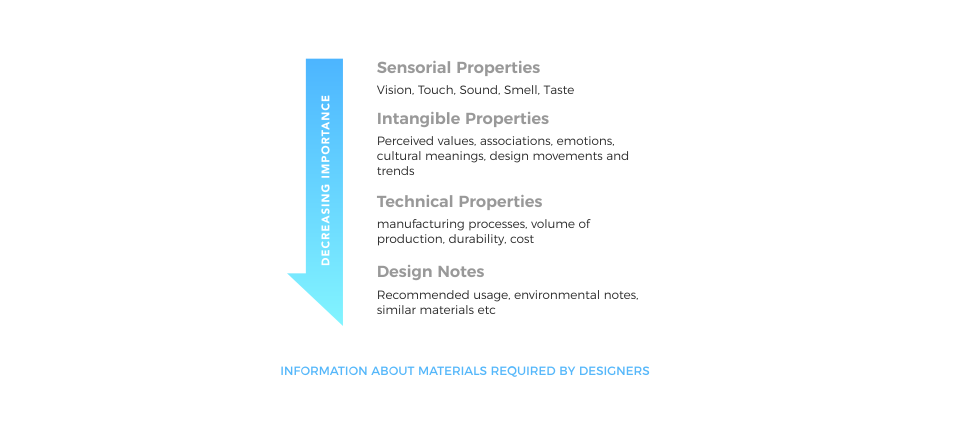
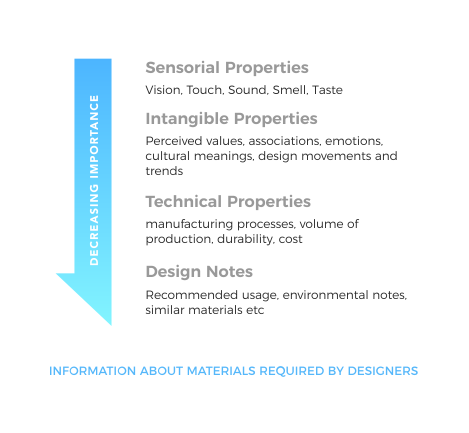
Various studies have found that sensorial properties and intangible
properties were very important in the design process. Karanet.al's complete finding included, in
order,
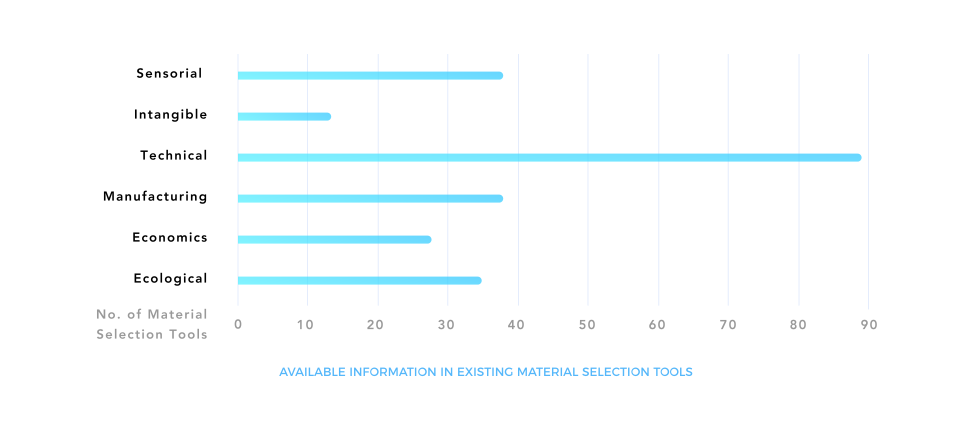
P.S Ramalhete et al. has analysed 87 such tools. They found out that, in
most of these software, materials are selected with mechanical and physical properties. The
information about aesthetics and surface properties were low in the analysed databases. This
limits these tools to act as inspiration sources, which is what a designer need. The interface
quality of these tools were also found to be low.
What are Sensorial and Intangible Properties?
Sensorial properties are how users feel the material including vision,
touch, smell, sound etc.
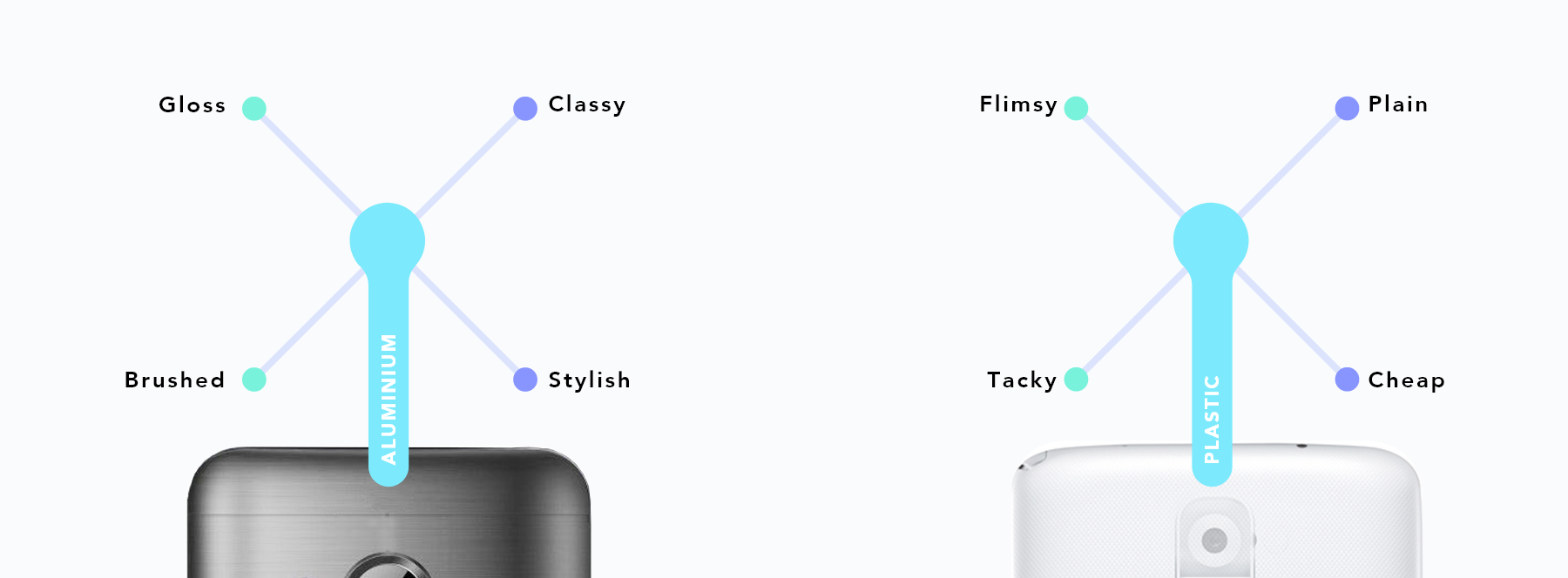
These sensorial properties along with the other properties result in the perceived value,
emotion, cultural meaning of the particular material. These properties which exist is the
imagination of human society are called intangible properties.
LITERATURE RESEARCH
How do people perceive materials
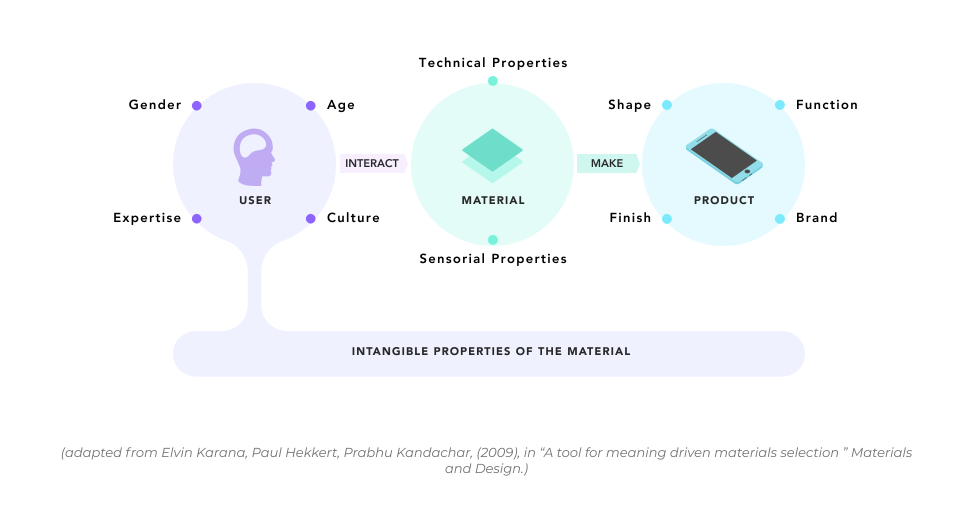
Human perception of materials usually depends not just on one user, it
depends on the whole society. In short, all the properties below add upto the meaning of the
material.
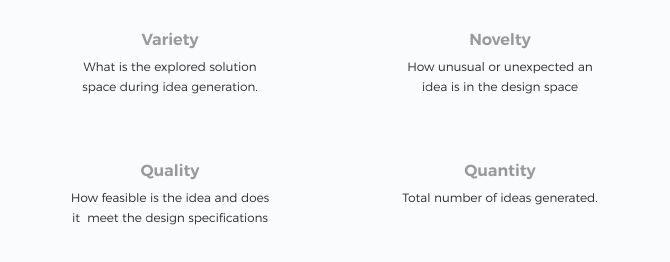
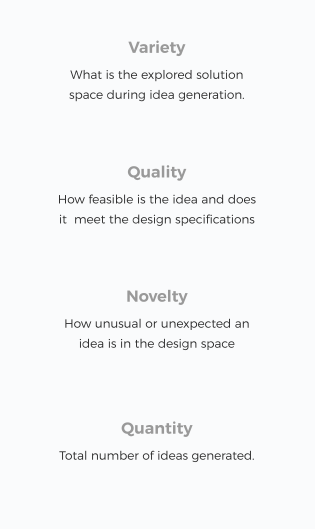
How to measure ideation effectiveness
LITERATURE RESEARCH
How to improve ideation effectiveness? Analogy
Analogy is a useful approach for solving an unfamiliar new problem. Analogy
adapts the solutions or problem solving process to the past problems for the new problem. By
analogy, the relations between the new problem and some past experience or knowledge about a
particular phenomenon can be found. This experience or knowledge can be placed in the new
situation so that the new problem can be better understood or a new plan for solving the problem
can be generated.
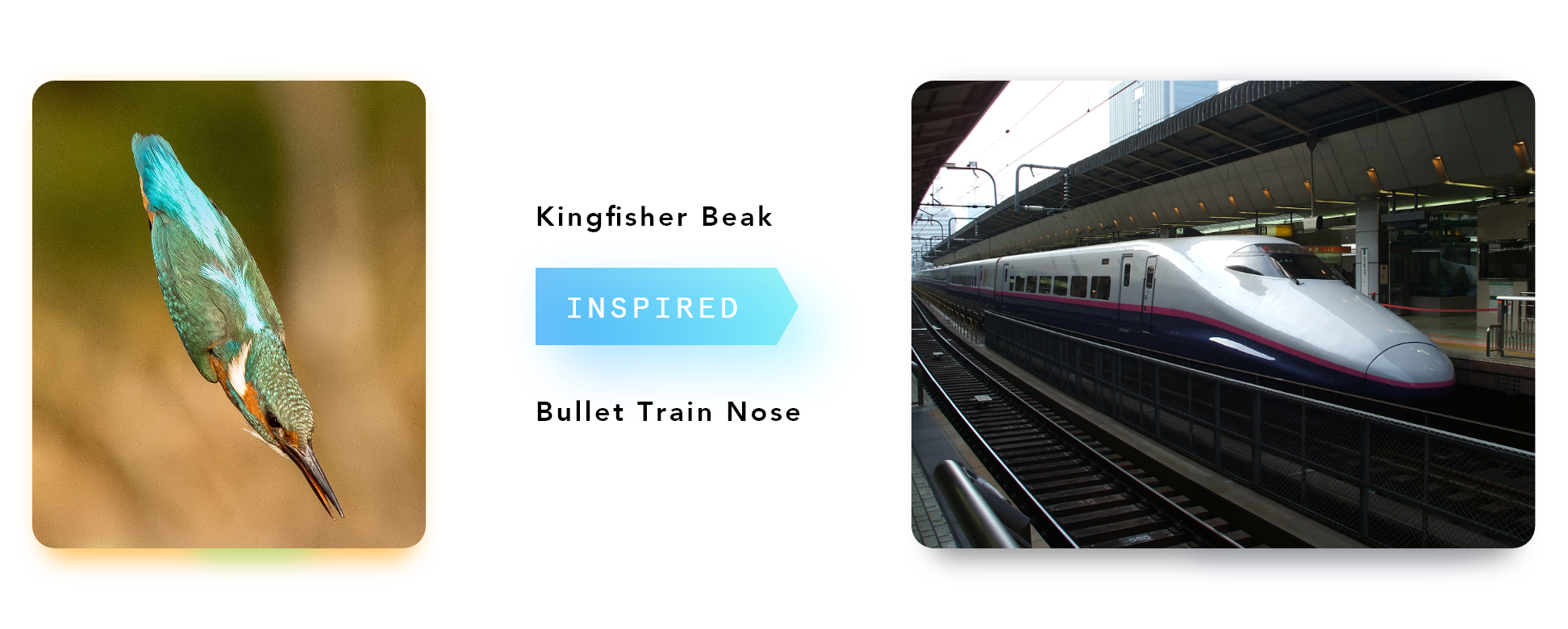
If designers are provided with possible analogies, it can lead to an
increase in the novelty and variety of ideas being generated. Designers’ level of expertise will
affect how well they can come up with ideas. Analogy-making is, however, double-edged: on one
hand, it allows experts to consider promising ways for designing a new object; on the other
hand, it can restrict the boundaries of the space of research, the extent of design ideas, the
range of procedures to be used and thus, reduce creativity.
USER EXPERIMENT
How analogies affect ideation process
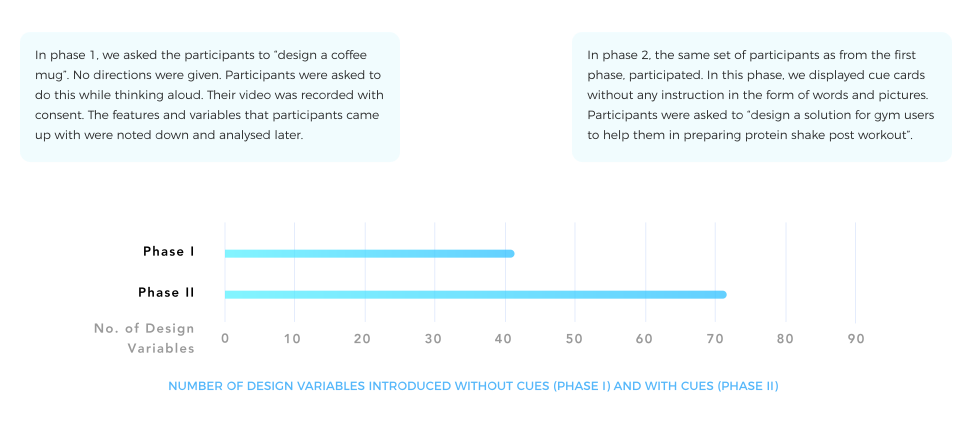
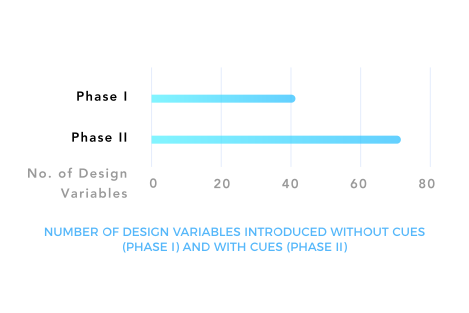
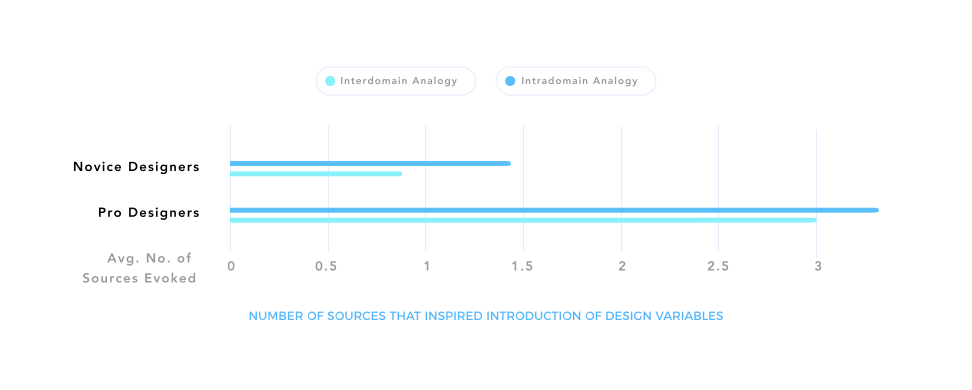
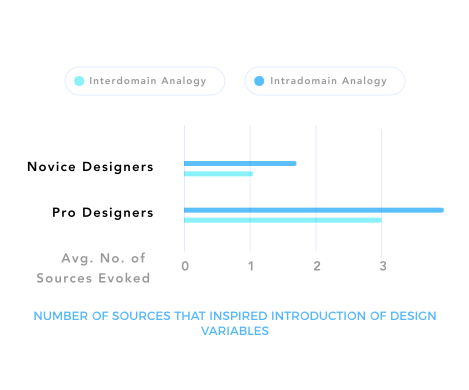
The number of variables in the second phase considerably increased due to
the introduction of design variables. However there was a unwanted side effect to this increase
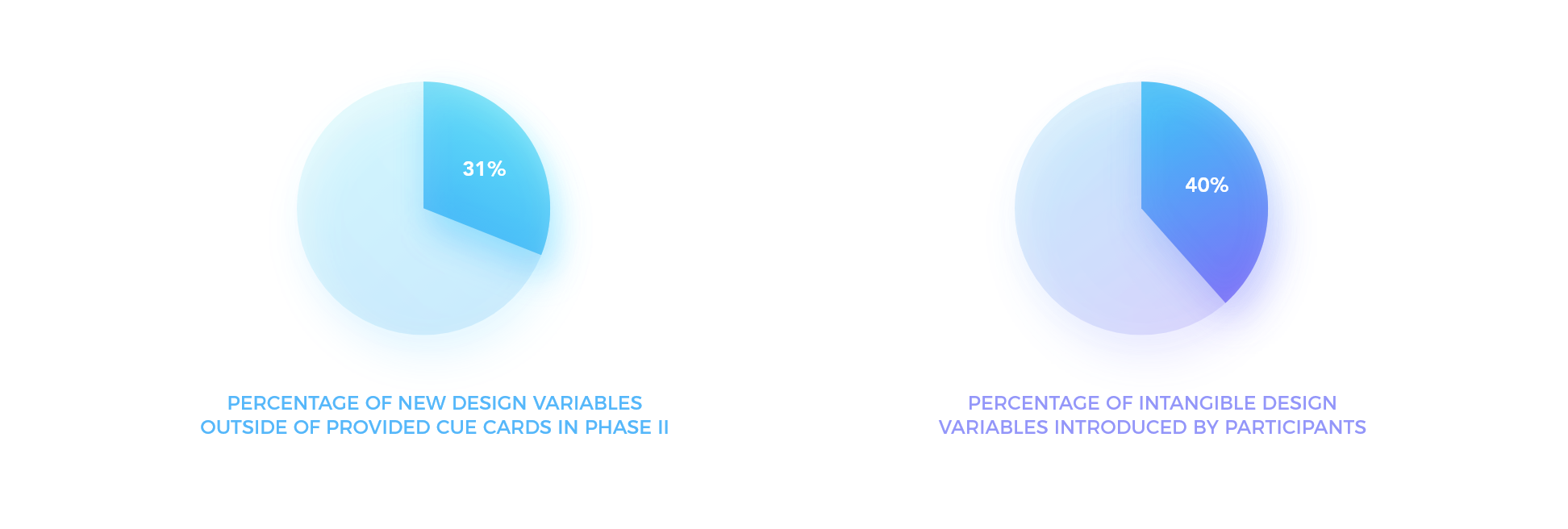
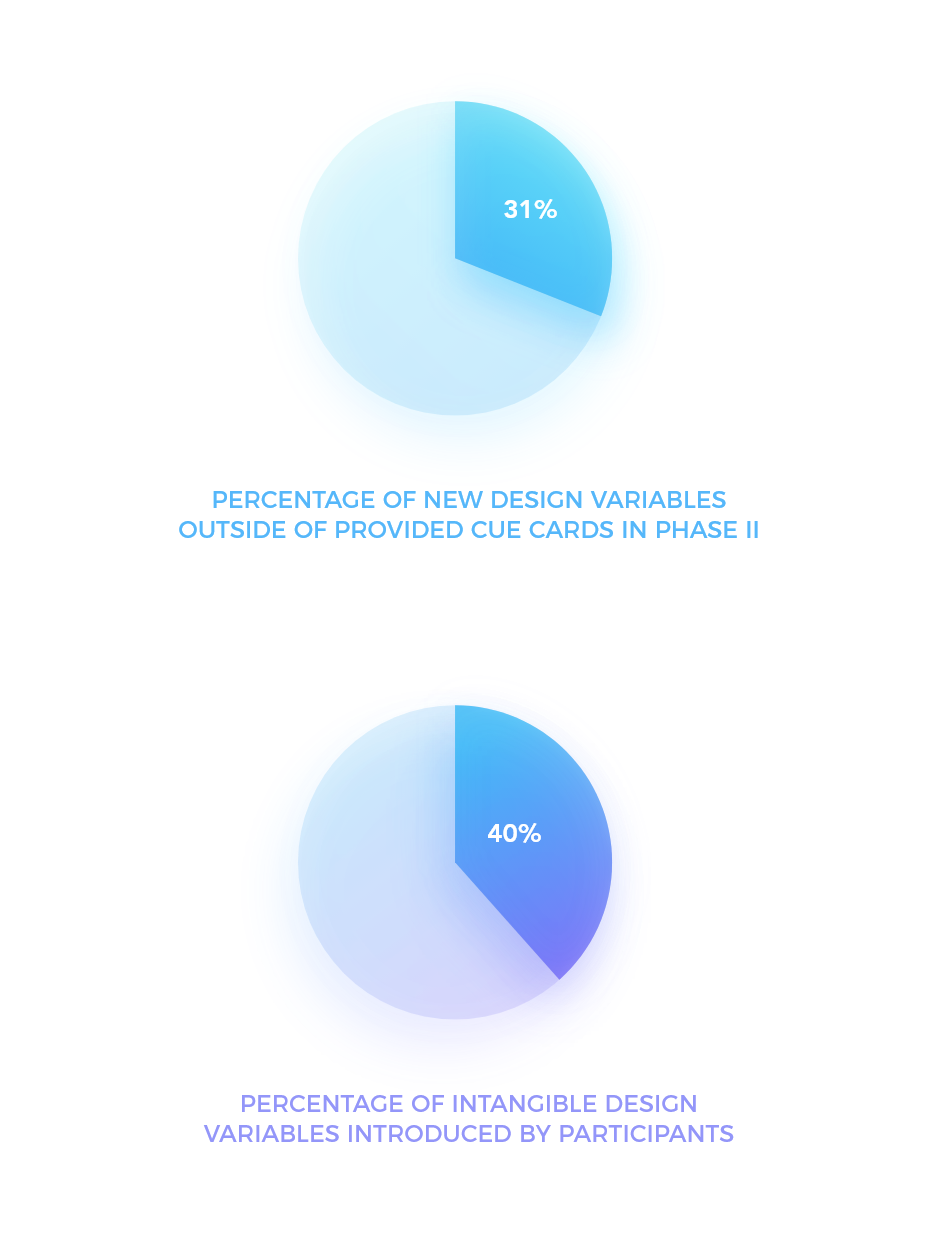
in the design variables introduced. Almost all of them came from supplied cue cards. The number
of new design variables were very low.
USER INTERVIEW
What is the process followed by Product Designers
We conducted interviews with 4 Product designers about 6 projects they were
working on. The interview was conducted to understand the process followed by the designers to
achieve their design goal. We specifically wanted to understand their design process., where
does material selection fall into this process and about their goals and pain points.
- There is no definitive process. The exact process depends on the problem statement at hand.
- Design is coevolutionary. The process is not always linear and it changes as designer goes along the design process.
- It is not always a problem that initiates a design process. A new material or a new manufacturing process or a new product can inspire the designer to create a new product.
- Material selection in some case might not happen, because the stakeholders would have preselected the material and the manufacturing process because of some constraints like cost.
- Aesthetics or Technical properties are given more importance in the conceptual design stage based on the product. In case of aesthetics, usually the designer freestyles with textures and finishes on the conceptual 3d model in the early stage or try different different sketch renders.
Goals
- Find the most optimum material for the project.
- Meet all the technical requirements for a material
- Minimise or maximise certain properties like cost and weight.
- Ability to search for materials with existing product names, sensorial properties and intangible properties.
- Know about the market trends and news regarding the new material technologies.
- To know more about what have been done with a particular material. This acts as an inspiration source to the designers and also clarifies the possibilities of the material
Problems
- Insufficient data in the existing material selection tools. This includes sensorial properties and intangible properties and example products.
- Doesn’t know whether a form could be manufactured with existing technology. The lack of information about what is possible and what is not with a particular manufacturing technique.
- No knowledge about new materials and a lot of patented materials are not available publicly.
- In early design phases the exact values for materials characteristics are not present. But often required to search for materials. Also some are unable to understand some technical properties
FEATURES
Increasing the Ideation Effectiveness
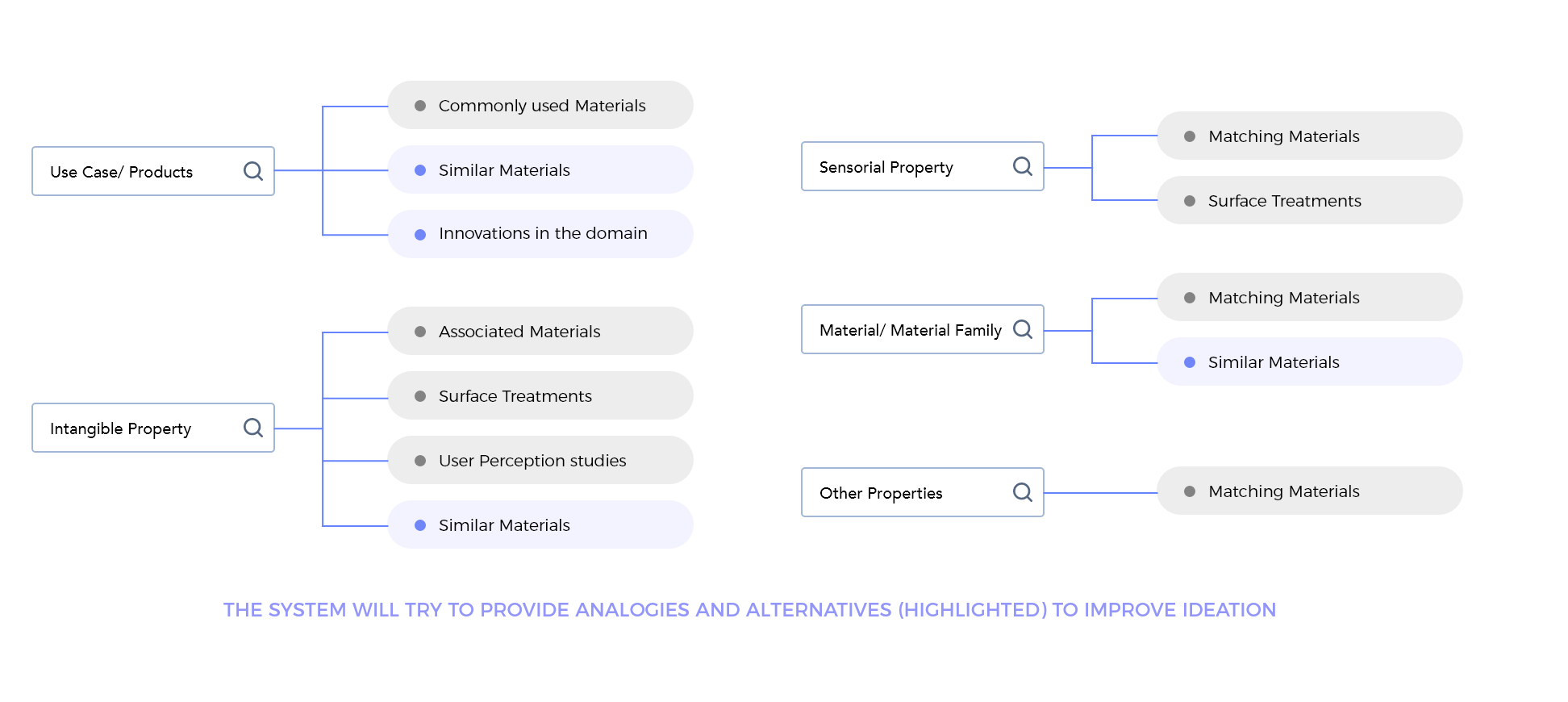
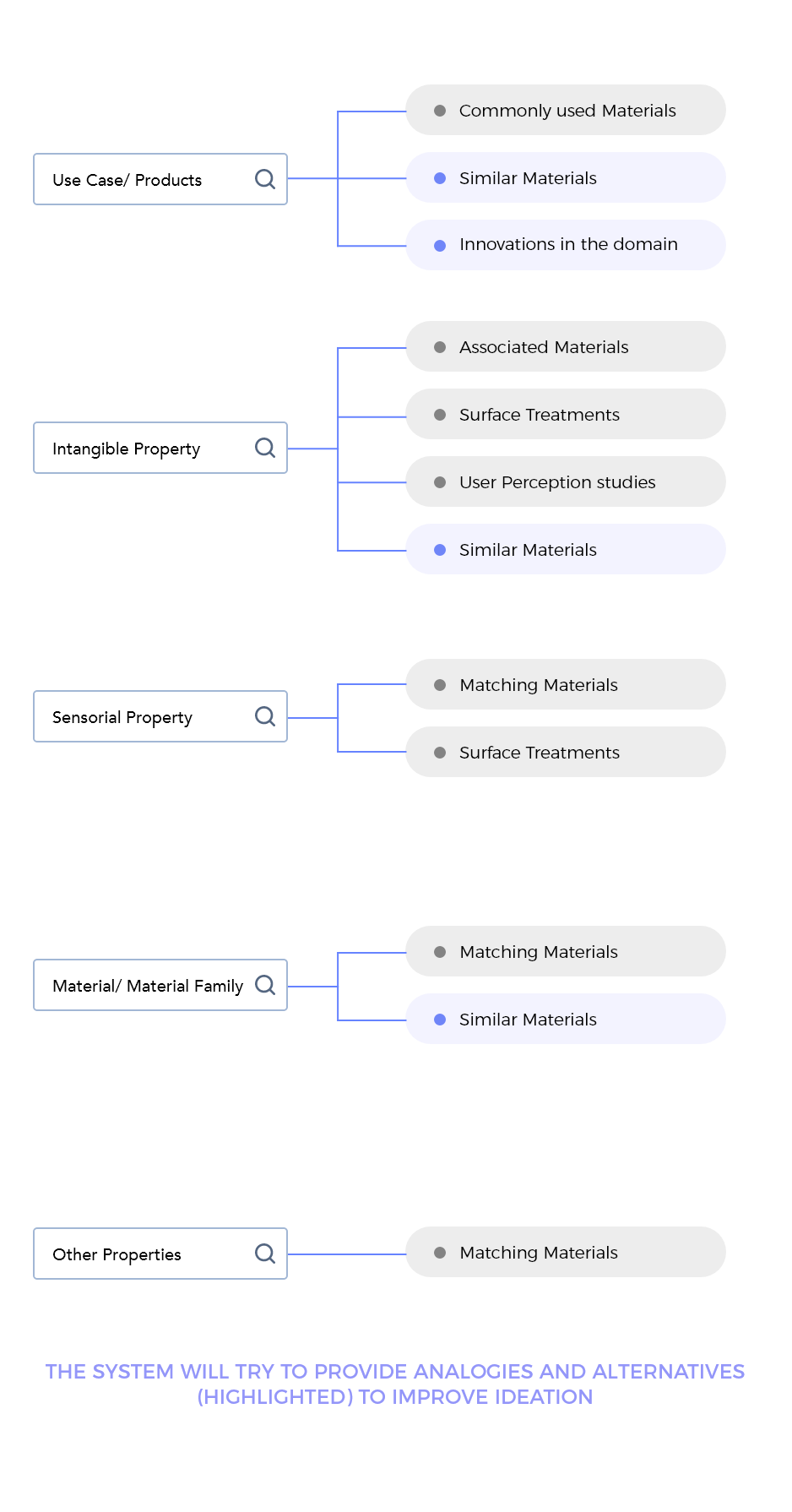
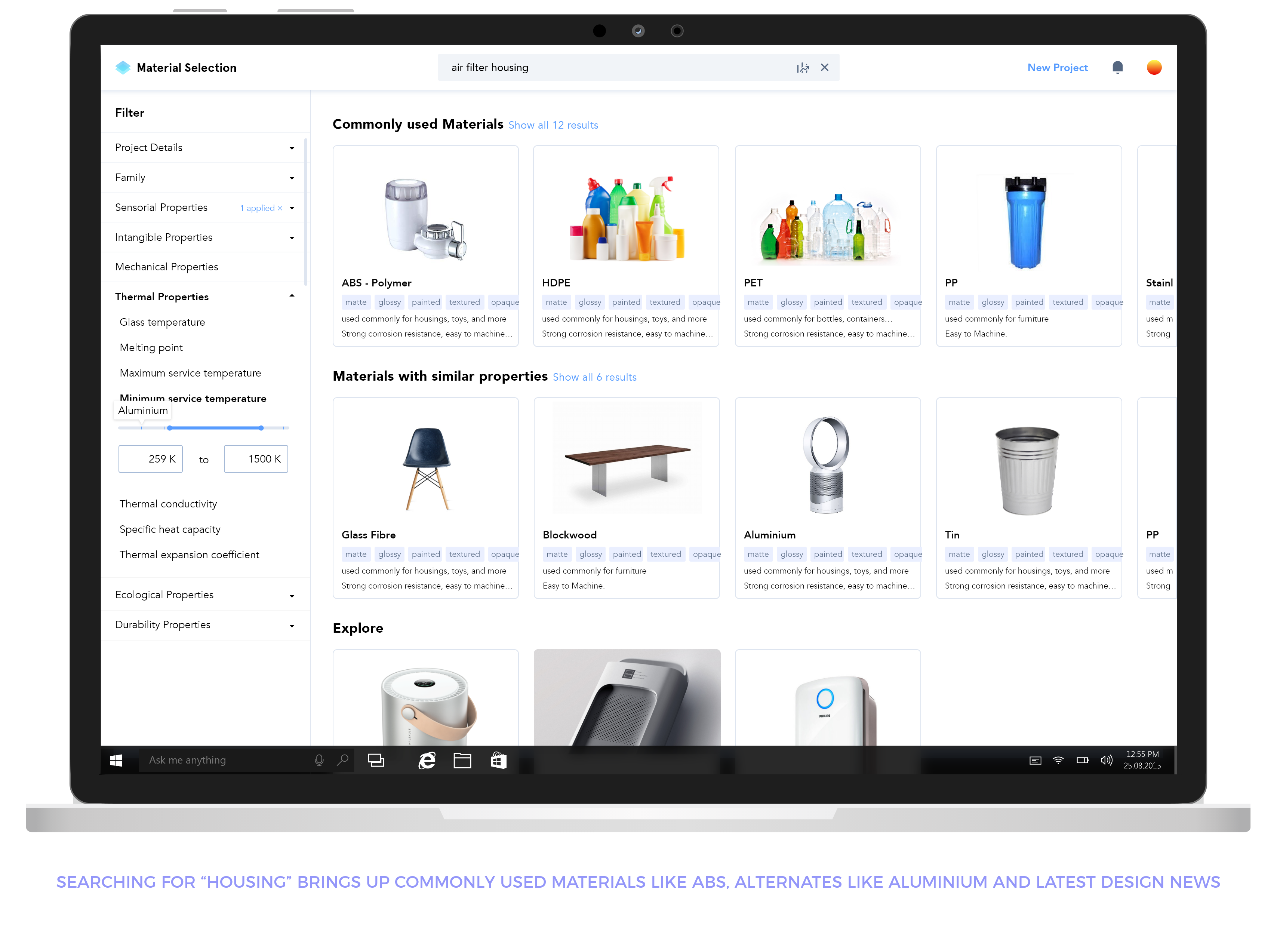
As we discovered earlier, analogies can increase ideation effectiveness if
done correctly. For this, the software identifies the search term and tries to find similar
materials from the properties of commonly used materials, identify the domain and then gives
latest news and trends
FEATURES
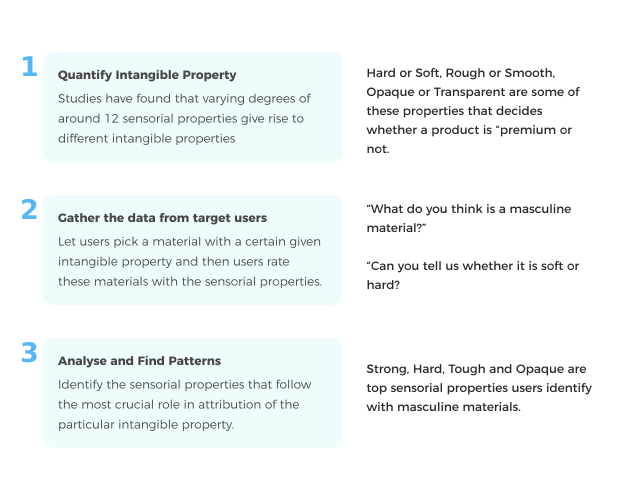
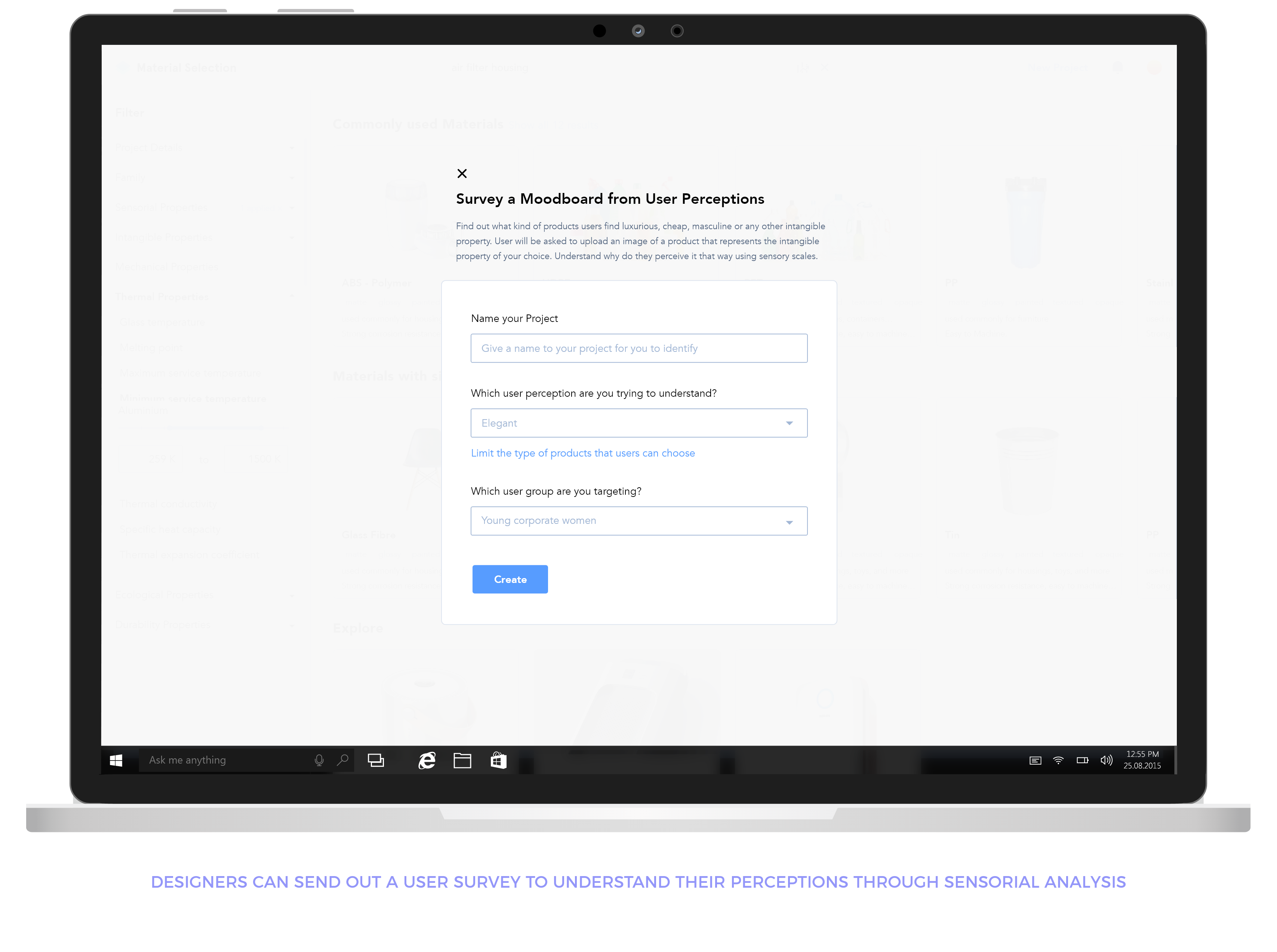
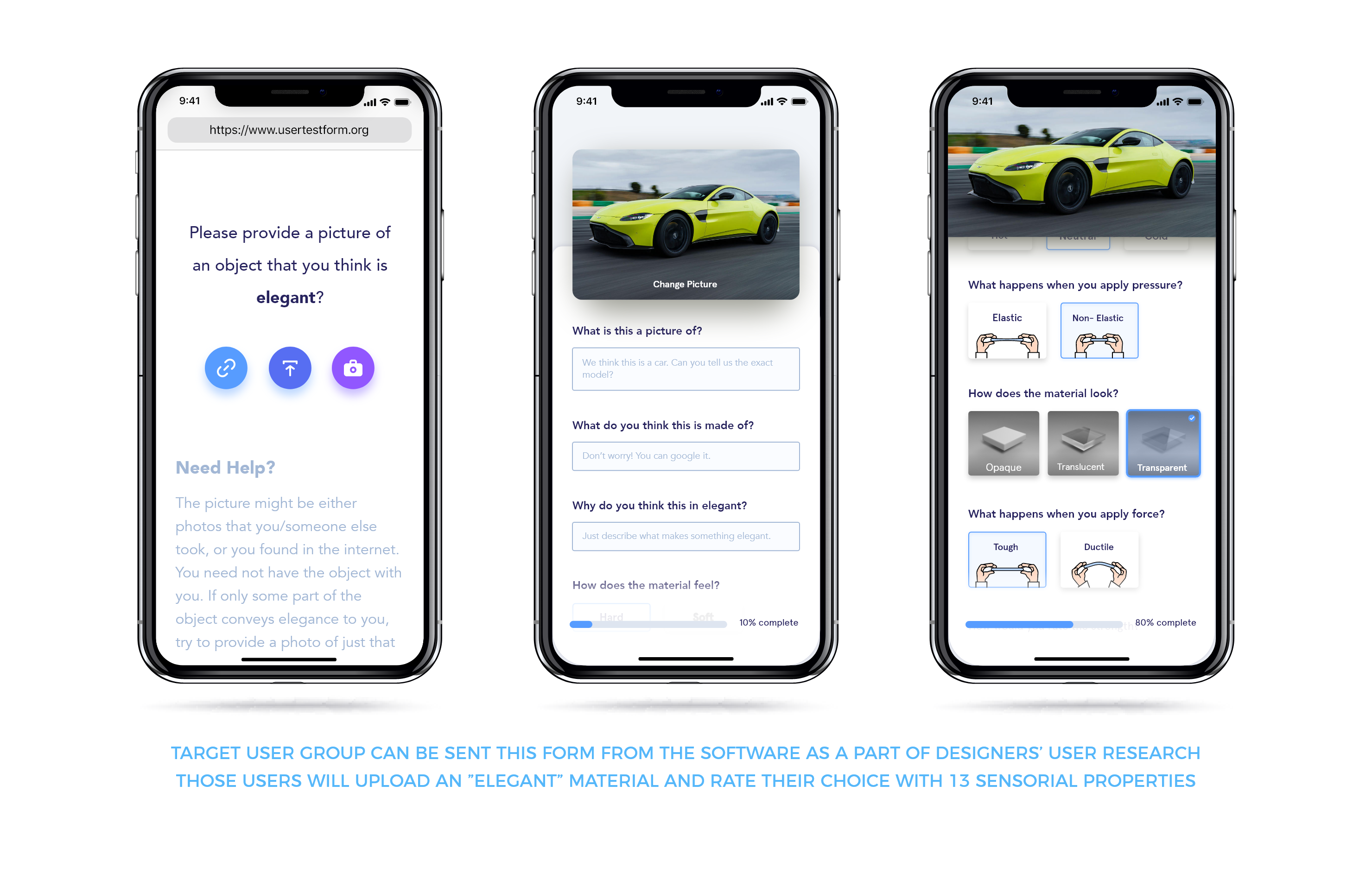
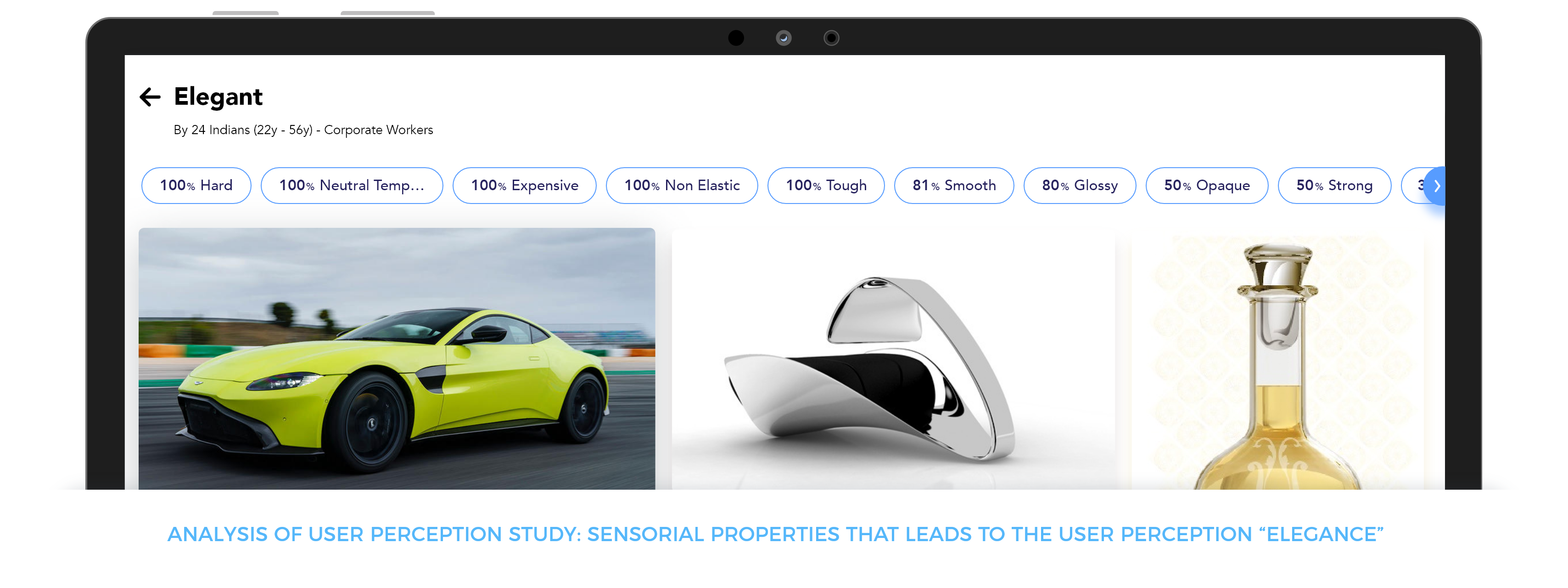
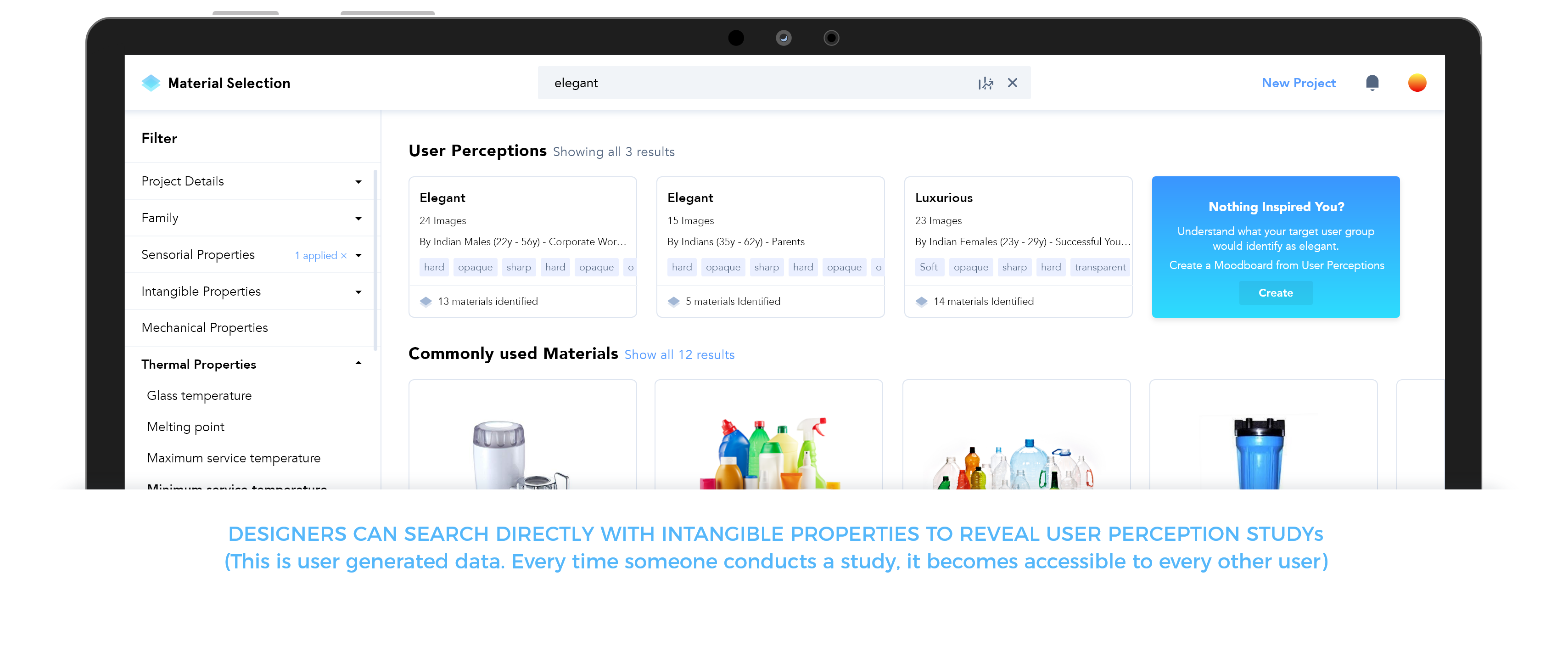
Understanding User Perceptions - Intangible Properties
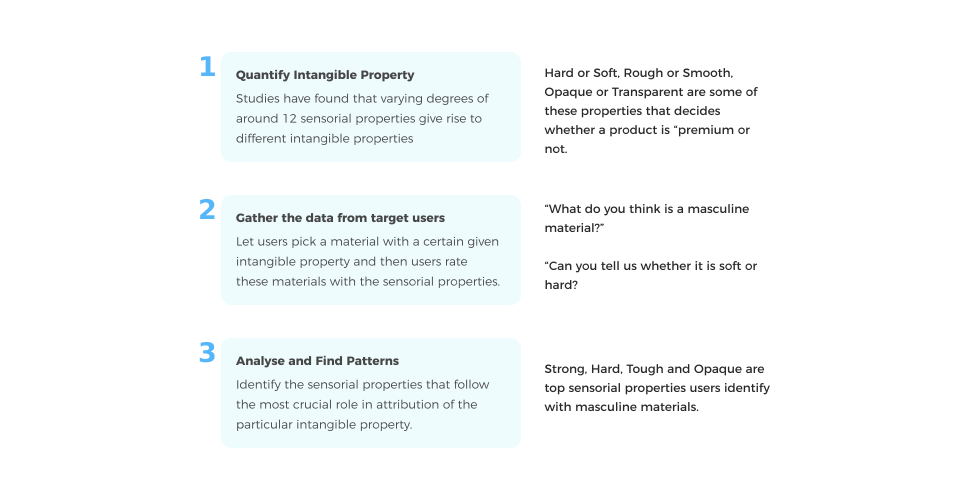
Intangible properties of a material are user perceptions. Because of these
properties solely depending on the user, it is important to know what the user thinks of the
desirable intangible properties before design language is set. Karana and Hekkert’s research
argues that these perceptions are the dependent on interaction between user and the product
which is dependent on sensorial properties of materials. Therefore, we used the tool for
‘meaning driven material selection’ developed by Elvin Karana and her colleagues.
FEATURES
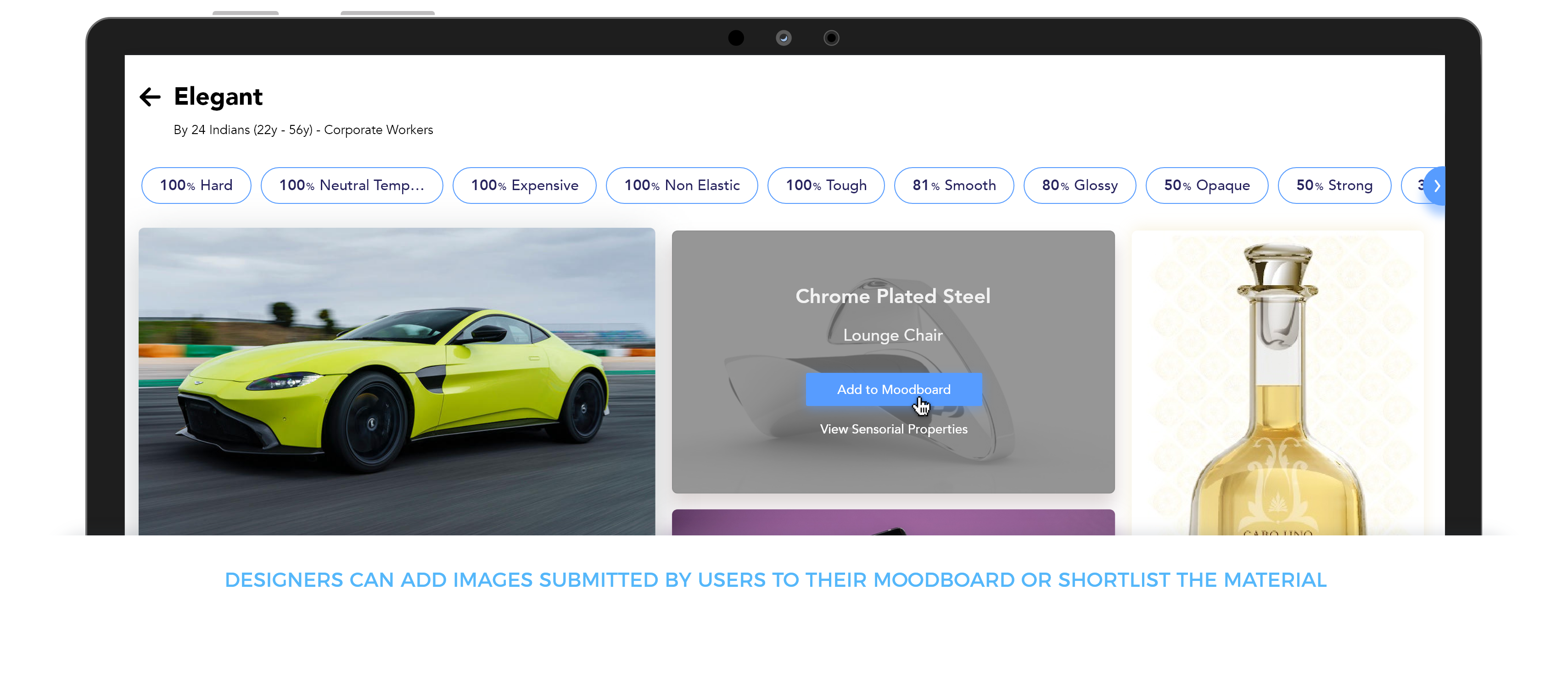
Incorporating Material Selection from early stages of Design - Moodboard
Almost all the designers who were interviewed, use moodboard in their
design process to set a design language so that the final product is perceived in a desired way.
Material properties contribute largely to the user perceptions. So it is important to
incorporate material selection early in the design process.
CONCLUSION
Thank You
We could not build this software as it has a lot of data requirements.
Collecting those meant we go beyond the scope of this project. As such we could not user test
this software completely to measure the increase in the ideation effectiveness.
Boosting creativity using computers is one of my passions. I am currently exploring artificial intelligence to understand the scope of this better. Thank you for reading.
Boosting creativity using computers is one of my passions. I am currently exploring artificial intelligence to understand the scope of this better. Thank you for reading.